

Clinical ultrasound technology has actually changed client care, giving doctor a window right into the body without the need for intrusive treatments. Among linear probe ultrasound of ultrasound probes available, direct probes are specifically versatile, made use of for a range of applications, including vascular and musculoskeletal imaging. Selecting the right direct probe for your medical technique is vital for analysis precision and person treatment. Here's an extensive overview to help you through the process.
Key Considerations When Choosing a Linear Ultrasound Probe
The primary step in choosing a straight ultrasound probe is to consider your practice's details requirements. Are you mainly concentrated on soft cells imaging or do you take care of a high quantity of treatments including surface structures? The frequency range of the probe plays an essential role in photo resolution and deepness penetration. Additionally, the physical comfort designs of the probe's layout can influence individual convenience and, by extension, the high quality of the scan.
An additional major factor to consider is the volume and types of people you serve. A busy experiment a variety of clinical requirements may gain from a multi-frequency direct probe that can be adapted to suit various applications, while a specialized technique can select a probe maximized for a details frequency.
Comprehending Frequency Arrays and Their Professional Applications
Frequency is a step of just how firmly spaced the acoustic wave cycles are and straight impacts photo clarity and deepness. For linear probes, greater frequencies imply much better resolution of surface frameworks, such as tendons and vessels. Reduced frequencies, while supplying deeper penetration, might cause reduced resolution images.
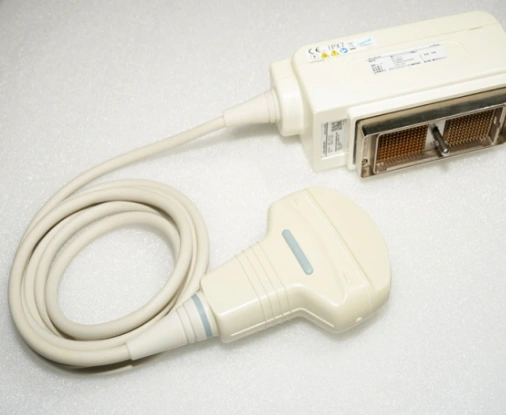
In sensible terms, a linear ultrasound probe with a frequency series of 10 to 15 MHz is appropriate for applications like breast, thyroid, and testicular imaging, where comprehensive photos of shallow structures are vital. Conversely, a variety of 5 to 10 MHz is better for procedures including muscle mass, joints, and nerves. It's necessary to match the probe's frequency range with the intended medical applications to attain the finest outcomes.
The Value of Probe Compatibility with Ultrasound Machines
Not all ultrasound probes are compatible with every ultrasound machine. Various equipment versions and makers might utilize exclusive link kinds and procedures. Before buying a straight ultrasound probe, make sure that it is completely suitable with your existing ultrasound system or that you are prepared to invest in a maker qualified of supporting the brand-new probe.
Compatibility extends past physical connection to consist of data transmission and interface integration. A probe that seamlessly incorporates with your ultrasound equipment will allow for a smooth workflow and efficient use by team. Whenever feasible, consider buying probes and devices from the same vendor, as they are most likely to be designed with interoperability in mind.
A Purchaser's Guide to Linear Ultrasound Probe Add-on
Your probe is just the start. To operationalize it fully, you'll require a range of devices. These could include probe covers, gels, and storage remedies. Purchasing premium devices is vital to protect your probe and keep the sterility of the scanning atmosphere.
Probe covers are crucial for stopping cross-contamination and ought to be chosen based upon compatibility with your specific probe version. Ultrasound gels assist to create a medium for sound wave transmission and are vital for getting clear images. When acquiring gels, try to find options that won't harm the probe's lens or housing.
Additionally, consider storage and transport solutions that protect the delicate probe from damage. This might indicate buying a safe case or wall surface mount for safekeeping when the probe is not in use.
Economical Methods for Updating to Advanced Linear Probes
The most recent developments in direct ultrasound probes use boosted functionalities, such as 3D imaging, needle assistance, and elastography. While these features can significantly improve diagnostics and individual treatment, they typically feature a greater cost. Affordable strategies for practices taking into consideration an upgrade include renting equipment or buying refurbished probes from reputable suppliers.
Leasing enables techniques to get accessibility to innovative equipment while managing money flow properly. Reconditioned probes, when sourced from a relied on supplier, can offer considerable savings without jeopardizing on high quality. It is very important to make sure that any refurbished probe includes a warranty and has actually been extensively examined to meet market requirements.
One more approach to handle prices is to coordinate with providers for solution agreements that cover repair and maintenance. Routine maintenance can expand the life expectancy of your probes and make sure that they continue to do at their best.
In conclusion, the choice of the right direct ultrasound probe entails a thoughtful evaluation of your practice's needs, an understanding of the technology's range and tolerances, factors to consider for maker compatibility, a thorough strategy to accessories, and the application of calculated economical concepts. By taking the time to evaluate each of these elements, you can guarantee that your financial investment in a straight ultrasound probe improves the capacities of your method and the care of your clients.
Contact Medical-Probes for more details on our line of straight ultrasound probes and accessories.